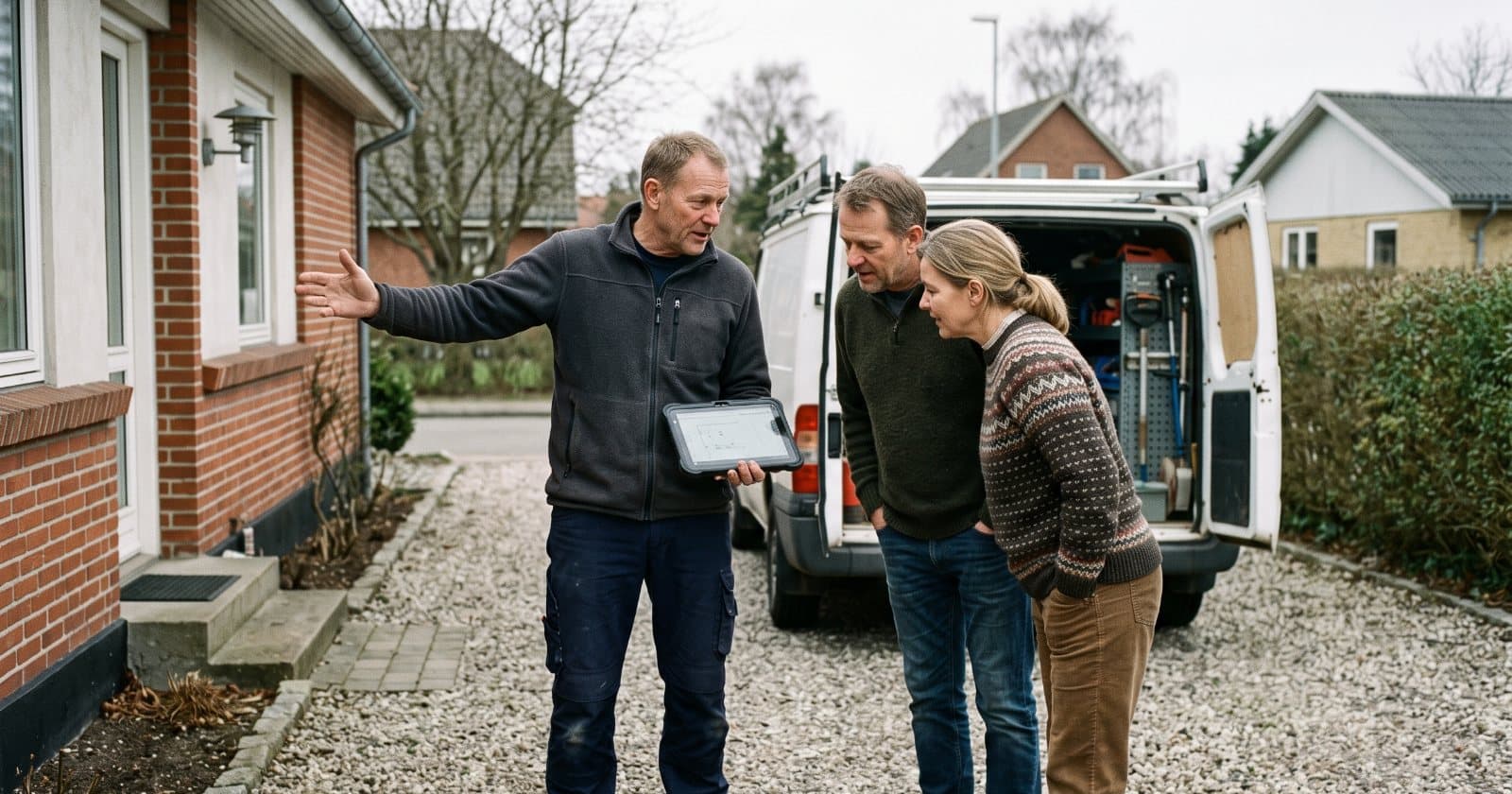
Should estimates be free? How to price site visits properly
Should estimates be free? How to price site visits properly
Estimates should be free only for straightforward jobs you can quote quickly from a short call, photos or a brief visit nearby. For anything that requires significant travel, detailed measuring, specialist assessment or a lengthy on-site visit, a small call-out or survey fee is reasonable and increasingly standard. The right answer depends on how much time the estimate costs you, not on what competitors advertise.
Many tradespeople never actually do this maths. "Free estimate" becomes a habit picked up early in the business and never revisited, even as the business grows, jobs get bigger, and the free visits start costing real hours every week.
What a "free" estimate actually costs you
A free estimate isn't free to you - it's free to the customer. You're still paying for it, just in time rather than invoice lines. Add up a typical site visit properly:
- Travel time there and back
- Time on site measuring, discussing, photographing
- Time afterwards writing up the quote
- Fuel and vehicle wear
For a local job that takes 20 minutes on site and five minutes to quote from your van, that cost is low enough to absorb. For a 45-minute drive, an hour on site, and a complex quote written up that evening, you could easily be looking at two to three unpaid hours. If you do that three or four times a week and only convert half, you're giving away most of a working day for nothing.
This is the real question behind "should estimates be free": not whether it's generous, but whether the maths still works once your diary and job sizes have changed.
When a free estimate still makes sense
Free estimates earn their keep in a few specific situations:
- Small, local, quick-to-assess jobs. A dripping tap, a socket swap, a small patch of guttering - jobs you can price confidently from a photo or a five-minute look.
- High-intent leads. A customer who has already described the job clearly, sent photos, and asked for a specific date is far more likely to book than someone who's "just getting a few quotes."
- Repeat or referred customers. Someone who's used you before, or come via a trusted referral, is a near-certain conversion. The free visit is really just good account management.
- Slow periods. In a quiet month, a free visit that fills an otherwise empty slot costs you almost nothing and keeps the pipeline moving. This is a different calculation to a free visit that displaces paid work in a busy week.
If most of your jobs fall into these categories, keeping estimates free is probably still the right call - just keep reviewing it as your job mix shifts.
When to start charging for estimates
Charging for an estimate makes sense once any of the following becomes true:
- The job requires a proper site survey - structural work, large renovations, anything needing detailed measurements or specialist checks before a number can be given.
- Travel is significant. Many trades set a radius (say 20–30 minutes) beyond which a call-out fee applies, often refundable against the job if it goes ahead.
- Your free estimates are converting badly. If you're writing ten quotes a week and winning two, you're subsidising eight strangers' shopping-around habits. A fee filters for people who are actually ready to commit.
- You're consistently busy. When every week is full, an unpaid hour spent on a visit that doesn't convert is an hour you didn't spend on paid work. Scarcity changes the economics.
A common, low-friction approach is a modest fixed survey fee that's deducted from the final invoice if the customer goes ahead. It signals seriousness on both sides without feeling like a barrier, and it typically filters out the callers who were never going to book anyway.
How to introduce a fee without losing good customers
Switching from free to paid estimates can feel risky, but it rarely costs you the customers worth keeping, provided you handle the change clearly:
- Explain the fee as covering your time and expertise, not as a cash grab - most customers accept this when it's framed plainly.
- Make it refundable against the job. This removes most of the objection, since the customer only pays if they don't proceed.
- Keep a free-estimate exception for simple, local jobs. You don't need an all-or-nothing policy.
- State it upfront, on your website, in your voicemail message, and when a lead first contacts you - surprises at the doorstep damage trust.
- Track the result for a month. Fewer but better-qualified visits usually means a higher hit rate and more billable hours, even with fewer total site visits.
If you're fielding a high volume of enquiry calls and struggling to triage which ones are worth a free visit, an AI phone assistant can handle first contact, ask the qualifying questions, and flag the jobs worth your time - see our guide on missed calls costing you jobs for more on this.
Using quoting tools to cut the cost of estimating
Whether or not you charge for the visit itself, the real lever is reducing how long each estimate takes you to produce. A faster quoting process means even free estimates cost you less, and paid ones become pure profit on the time saved. AI quoting tools that turn a site visit, a call transcript, or a set of photos into a priced draft can cut hours of admin down to minutes - worth reading alongside our breakdown of how to quote a construction job properly and our honest look at whether AI quoting software is worth it.
Frequently asked questions
Should estimates always be free for tradespeople?
No. Free estimates make sense for quick, low-cost-to-produce quotes, but larger jobs, long travel, or detailed surveys are reasonable to charge for, often as a refundable fee against the final job.
How much should a paid estimate or call-out fee cost?
There's no fixed figure, but it should roughly cover your travel and time for that visit. Many tradespeople set a modest fixed fee and refund it against the invoice if the customer proceeds.
Will charging for estimates lose me customers?
Some enquiries will drop off, but these are typically the least committed ones. Customers who are genuinely ready to book a job rarely object to a small, refundable fee explained clearly upfront.
How do I know if my free estimates are losing me money?
Track how many free visits you do each week against how many convert into booked work. If your hit rate is low and visits are eating significant unpaid time, it's a sign to introduce a fee or tighten who qualifies for a free one.
Should I charge differently for different trades or job sizes?
Yes - it's common to keep small, local jobs free to quote while charging for larger renovations, structural assessments, or anything requiring a detailed survey. Base the split on how much time each type actually costs you.
Ready to quote faster, whatever you charge for the visit?
Håndværker AI helps tradespeople turn site visits, calls and photos into accurate quotes in minutes, so every estimate - free or paid - costs you less time. Built in Denmark, EU-hosted, and GDPR-compliant. Visit Håndværker AI to see how it works, or book a free demo. This article was written with AI assistance and quality-checked by Carl & Martin. Questions? Reach us at cs@tilbudsgenerator.dk.
Read also
How to price a job when you can't see the full scope yet
You can't price what's behind the wall - but you still have to send a number today. Here's how to quote honestly when part of the job is genuinely unknown.
What a no-show site visit actually costs your business
A customer who doesn't answer the door costs more than the hour you lost standing there. Here's what no-show site visits really add up to - and a few practical ways to cut them down.
When and how to follow up on a quote (without sounding pushy
Most quotes aren't lost on price - they're lost to silence. Here's a practical follow-up rhythm, with wording, that turns "let me think about it" into a signed job.
How contractors lose jobs to missed calls - and how to stop it
A missed call is often a missed job - and most callers never leave a voicemail. Here is what missed calls really cost a trade business, and the practical ways to capture every lead.
How to write a follow-up text that customers actually answer
A quote that disappears into silence usually isn't lost on price - it's lost on a weak follow-up. Here's how to write a text message that actually gets a reply.
Win more work with less admin
AI tools for tradespeople across Europe - faster quotes, captured calls, and more booked leads. EU-hosted and GDPR-compliant. You review and approve everything before it’s sent.
See how the AI tools work