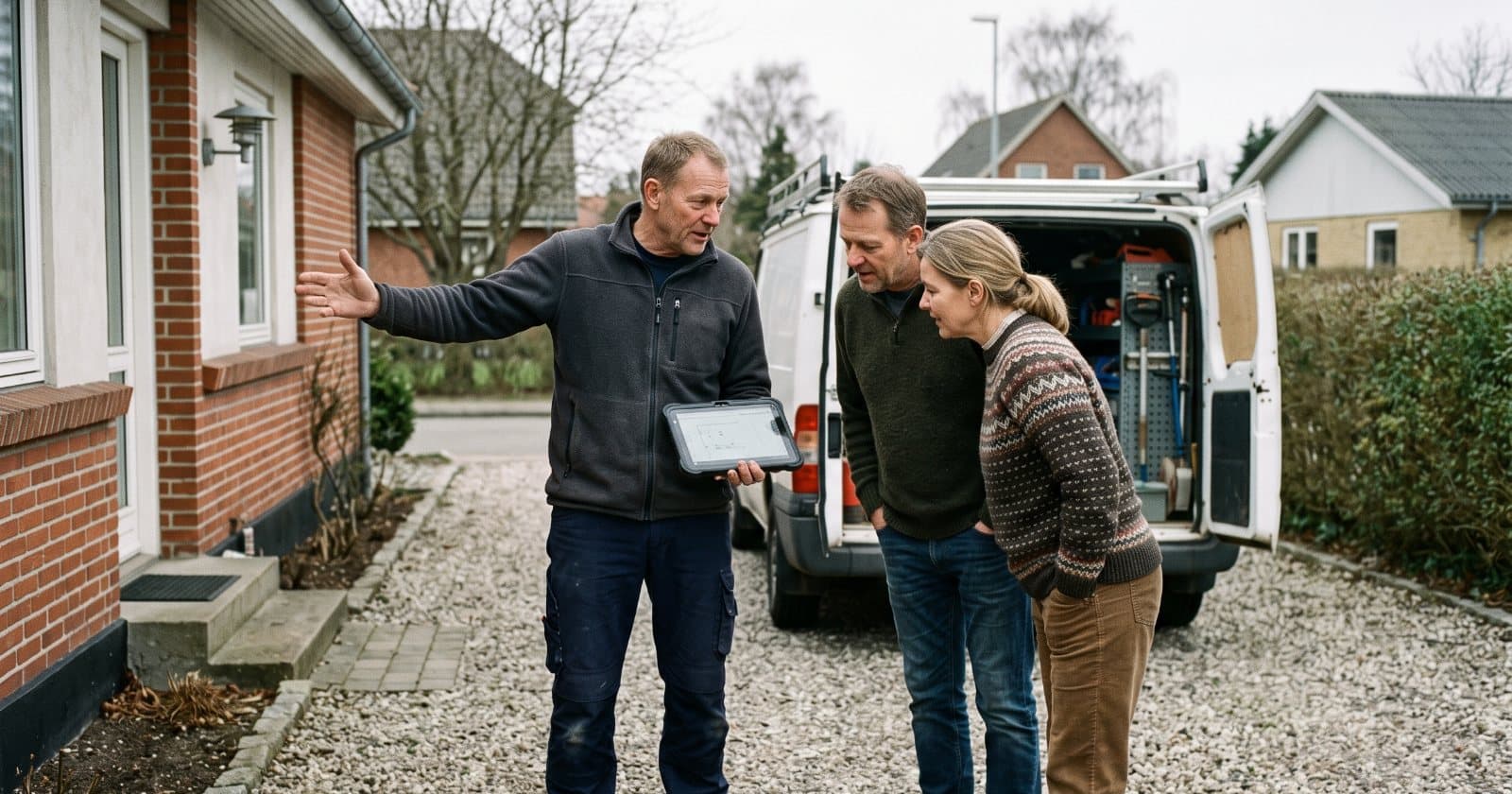
Win more jobs as a contractor without longer days
A small contractor can win more jobs in 2026 not by working longer, but by responding faster, quoting more consistently, and following up where most competitors stay silent. The gap between a full order book and a patchy one is rarely about price or skill - it is almost always about process. Fix three or four leaky stages in your sales pipeline and the extra work tends to arrive without a single additional hour on the tools.
The real reason small contractors lose work they should be winning
Ask most tradespeople why they lost a job and they will say the customer went cheaper. That is sometimes true. But research from European contractor networks in 2026 consistently points elsewhere: the most common reasons a potential customer walks away are slow response times, vague quotes, and silence after the quote is sent.
A lead that does not hear back within a couple of hours typically moves on. A quote that arrives four days after a site visit - against a competitor who sent one the same afternoon - is already fighting uphill. And a quote that is never followed up is, statistically, far more likely to be declined than one that receives even a single polite check-in message.
None of those problems require you to work more hours. They require you to work differently.
Speed of response is your first competitive edge
In a market where many contractors are still juggling calls between jobs, the one who replies quickly stands out sharply. Studies of European trades businesses in 2026 suggest that leads contacted within 90 minutes are up to three times more likely to convert than those contacted the following day.
The bottleneck for most small firms is not willingness - it is capacity. You cannot answer the phone when you are under a sink or on a roof. This is precisely where an AI phone assistant earns its keep. Rather than letting an enquiry go to voicemail and likely be forgotten, an AI assistant can greet the caller, capture the key details - job type, address, preferred timing - and send you a structured summary the moment you are free. The customer feels heard. You have a qualified lead waiting, not a missed call.
See also: How contractors lose jobs to missed calls - and how to stop it.
Quoting faster without quoting sloppily
Speed at the quoting stage is the second place where small contractors typically lose ground. A quote is not just a price - it is a first impression of how organised and professional you are. A hand-scribbled note or a delayed email with round-figure estimates tells the customer you might be equally vague on site.
At the same time, sitting down for two hours every evening to write quotes is not sustainable. The contractors winning the most work in 2026 tend to use structured quoting templates and AI quoting tools that let them produce a clear, itemised proposal in well under 30 minutes, including materials, labour, any sub-contractor elements, and a validity period.
The key discipline is quoting the same day you do a site visit, wherever possible. Clients remember you. Their enthusiasm for the project is highest. And your notes are fresh. A quote sent the same afternoon as the visit typically has a noticeably higher acceptance rate than one sent three or more days later.
For a detailed look at structuring quotes that do not undercut your own margins: How to quote a construction job (without underpricing it).
The follow-up that most contractors skip entirely
Here is the uncomfortable truth: most small contractors send a quote and then wait. They worry about appearing pushy. The customer goes quiet, the job seems lost, and they move on.
But customers often go quiet for mundane reasons - they got busy, another quote arrived and they want to compare, or they are waiting on a partner's opinion. A single, well-timed follow-up message - sent around 48 to 72 hours after the quote - can be the difference between winning and losing that job.
The message does not need to be clever. Something as simple as: "Just checking you received my quote for the [job type] at [address]. Happy to answer any questions or adjust the scope if needed." That is it. It signals professionalism, availability, and interest - without pressure.
Automating this step is straightforward with modern contractor software. Set a rule: if no reply within 48 hours, trigger a follow-up message by SMS or email. Many contractors who implement this one change alone report winning an additional one or two jobs per month that would otherwise have slipped away.
Prioritise the jobs most likely to convert
Not all enquiries deserve equal energy. A contractor who spends two hours quoting for a customer who has already shortlisted five firms and is fishing for the cheapest number is often better off directing that time towards a lead who called based on a recommendation or a repeat customer with a new project.
A simple scoring approach helps here. Before investing heavily in a quote, ask:
- How did they find us? (Referral, repeat, or cold search?)
- Did they provide enough detail to suggest they are serious?
- Is the job type and scale a good fit for our current capacity?
Leads that score well deserve fast, detailed quotes. Speculative enquiries might warrant a quick ballpark figure first, with a full quote offered only if they confirm genuine interest. This alone can free up several hours a week that previously went into quotes that were never going to convert.
Build a simple system and repeat it
The contractors who grow sustainably in 2026 are not the ones with the most tools or the biggest marketing budgets. They are the ones who have turned their sales process into a repeatable system: a prompt response to every enquiry, a same-day or next-day quote, an automated follow-up, and a brief post-job check-in to invite the next referral.
Each of those steps can be partially automated with AI tools built specifically for tradespeople - tools that are GDPR-compliant, EU-hosted, and designed to fit around the realities of working on site rather than behind a desk. The up-front investment in setting up these systems is typically recovered within the first month of additional jobs won.
Frequently asked questions
How quickly should a contractor respond to a new enquiry?
Aim to respond within 90 minutes wherever possible. Leads contacted within this window are typically up to three times more likely to convert than those reached the next day. An AI phone assistant can help capture enquiries instantly when you are on site.
Does following up after a quote really make a difference?
Yes, meaningfully so. A polite follow-up sent 48 to 72 hours after a quote is sent can recover jobs that went quiet for practical rather than negative reasons. Many contractors report winning one or two additional jobs per month from this single habit.
How long should it take to write a contractor quote in 2026?
With a structured template or AI quoting tool, most standard quotes should take under 30 minutes. Same-day turnaround from site visit to delivered quote is achievable for the majority of residential and light commercial jobs.
Do I need expensive software to improve my conversion rate?
Not necessarily. Some improvements - like a follow-up message habit - cost nothing. AI tools for quoting and phone handling typically start from a few dozen euros per month, and the additional jobs won tend to offset the cost quickly.
What is the single biggest change a small contractor can make today?
Follow up on every quote you send. Most contractors do not do this consistently. A single message at the 48-hour mark, on every outstanding quote, is the fastest route to a higher acceptance rate without changing anything else.
If you are ready to turn your enquiries into a more reliable pipeline, visit Haandvaerker AI at /en to see how our AI quoting, phone assistant, and lead management tools work together for small contractors across Europe. Book a free demo and see what a difference the right system makes.
This post was written by AI and quality-checked by Carl & Martin at Haandvaerker AI. Questions? Reach us at cs@tilbudsgenerator.dk.
Win more work with less admin
AI tools for tradespeople across Europe - faster quotes, captured calls, and more booked leads. EU-hosted and GDPR-compliant. You review and approve everything before it’s sent.
See how the AI tools work